

.png)
This Year’s Grammys Worked: What They Got Right

Updated: Feb 3
Article Contributed by LJ Portnoy

For years, the Grammys struggled to hold attention beyond highlight clips and post-show discourse. Performances blurred together, categories felt preordained, and the experience increasingly asked audiences to endure rather than engage.
This year’s Grammy Awards marked a noticeable shift. Not through spectacle alone, but through sustained intention. The show operated less like a checklist of obligations and more like a curated conversation about where music is right now and why that matters.
From the opening moments, that difference was clear. Bruno Mars set the pace early, opening the broadcast with a performance rooted in familiarity and showmanship, then later returning for a secondary set. That alone signaled a departure from recent years: artists weren’t being rushed through single appearances. They were being given room to exist.

That sense of space carried through the night. When Sabrina Carpenter took the stage with one of the evening’s major early performances, it felt confident, playful, and fully formed—less a moment to prove something and more a moment to command attention. The sequencing mattered. The Grammys weren’t stacking chaos; they were building momentum.
When “Best” Became a Real Question Again
When the Best New Artist segment arrived, it landed not as an introduction, but as confirmation. Addison Rae, The Marías, Olivia Dean, Alex Warren, Sombr, and Lola Young appeared not as prospects, but as arrivals.

These were not distant breakout stories. These were artists whose songs already circulate through daily life—tracks people write about, sing along to, and actively seek out live. The Grammys weren’t declaring relevance; they were reflecting it.

That alignment carried through the awards themselves. When Olivia Dean won Best New Artist, the result felt measured rather than safe. Her work suggests longevity, restraint, and a confidence that doesn’t rush toward immediacy. In a category defined by abundance, durability emerged as a compelling differentiator.
Across the board, categories felt genuinely contested rather than contentious. That distinction mattered. The night wasn’t defined by snubs or outrage, but by difficult decisions made in strong fields.
Best Pop Solo Performance exemplified that tension. Daisies represented quiet vocal control and emotional precision, while Messy delivered rawness and unfiltered presence. When Lola Young won, the outcome clarified what the category chose to reward: vulnerability, personality, and risk over polish. The result wasn’t frustrating. It was persuasive.

Risk, Process, and the Value of Imperfection
That same philosophy shaped one of the night’s most discussed performances. Justin Bieber, returning to televised performance after nearly four years, avoided the expected route. Live looping, minimal staging, and exposed phrasing made the set feel human.
Choosing Yukon over Daisies emphasized that risk. The song offered less cushion and more exposure, and moments of loose timing made the recalibration visible in real time. Rather than hiding the process, the performance revealed it.
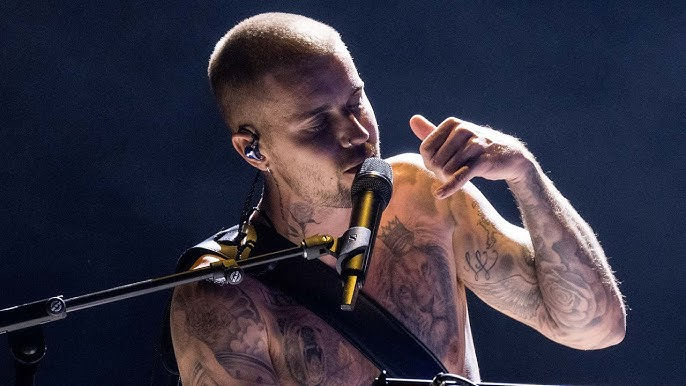
Justin Bieber’s recent albums feel less like definitive statements and more like explorations. The album showed us his ability to test his identity, sound, and restraint without fully locking them into place. The Grammys, historically inclined to reward stabilized craft, did not crown this phase. But the performance itself argued for the value of experimentation, not as failure, but as groundwork.
When Performance Became Narrative
If the night fully broke from tradition at any point, it happened with Tyler, the Creator. His set unfolded less like a performance and more like a short film. The transition from black and white to color, from stage to car, reframed the song as movement through identity.

The staged collision with an earlier self, followed by an explosion and a visibly marked return, rendered metaphorical physical. Growth was shown not as triumph, but as a consequence. The music never stopped. The narrative kept moving.
It was a reminder that awards-show stages can still be sites of conceptual ambition, not just presentation.
A Pause That Slowed the Momentum
One moment where the show briefly lost its pacing came during the in-memoriam segment. Honoring artists and industry figures we’ve lost is essential, and the weight of those absences deserves space. Still, the segment stretched long enough that it began to feel less like a reflection and more like a prolonged funeral service, slowing a broadcast that had otherwise been carefully structured.
In a year defined by living artists pushing boundaries and reshaping the present tense of music, the balance tipped a little too far toward mourning. A more focused tribute, or pairing remembrance with celebration through posthumous recognition, might have preserved the gravity without stalling the night’s forward momentum. The story this year’s Grammys told so well was about music still being made, still evolving, still alive. That throughline briefly blurred before the show regained its rhythm.
Big Wins That Reflected the Moment
By the time Luther won Record of the Year, the choice felt coherent. The song integrates lineage, production, performance, and intention into a fully realized whole. Kendrick Lamar’s win reflected completeness rather than dominance.
Album of the Year going to Bad Bunny carried even greater symbolic weight. A Spanish-language album taking the top honor without qualification or translation signaled an industry acknowledging the world as it exists now, not the one awards shows once imagined.
Why This Year Worked
What ultimately distinguished this year’s Grammys was not a single shock or sweep, but sustained trust. Artists were given time. Performances were allowed to unfold. Newcomers were treated as contemporaries rather than as auditions. Legacy acts were present without dominating the narrative.
The show assumed attention rather than begging for it, and, in doing so, earned it.
For the first time in years, the Grammys didn’t feel like a scoreboard. They felt like a conversation about craft, risk, genre, and timing.
And that conversation was worth staying for.


Comments