

.png)
Seafret - Underground Radar: The Billion-Stream Permission Slip

Updated: May 20
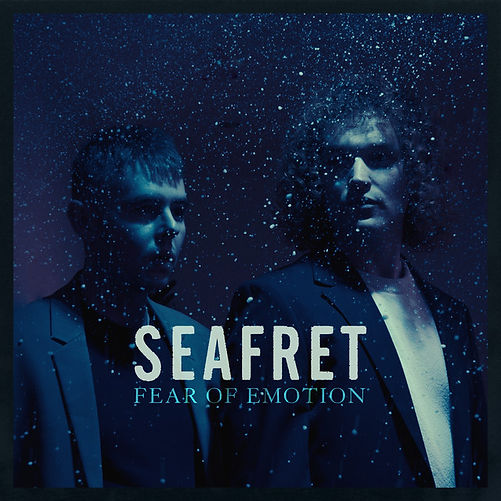
Seafret didn't rush Fear of Emotion. They couldn't have even if they'd wanted to.
Article Contributed by LJ Portnoy, Editor-in-Chief
Most viral moments come with a clock attached. You blow up, the timeline compresses, and suddenly you're scrambling to feed the algorithm something new before the window closes. But when Atlantis found its second life on TikTok nearly eight years after its release, quietly accumulating streams until it crossed a billion plays, the clock that usually starts ticking just... didn't.
That's the thing nobody talks about when the Atlantis story gets told. Yes, Jack's niece texted him to get a TikTok account because his song was everywhere. Yes, they logged on to find thousands of videos with it playing underneath. But what mattered most for the record that would follow wasn't the scale of the moment or the new audience it brought. It was the strange, unexpected silence it created around whatever came next.
"It filled up so much of our space on the internet," Harry told us. "We could just sit back while that was happening and create this new record and make sure that it was something we truly loved." Jack put it more directly: "It took the rush away."
That's the real gift Atlantis gave them. Not validation, not label leverage, not a bigger room to play. Time. The internet was so busy with the old song that nobody was demanding the new one, which meant that for the first time in their career, Jack and Harry got to make a record entirely on their own terms, at their own pace, without anyone waiting at the door.
The Long Way Around
Fear of Emotion is their fourth album, and the first one built without any external pressure shaping the timeline. They wrote a pile of songs, chose the ones that actually meant something to them personally, and built the record from that shortlist. "It was the first time we've done that," Harry said, and you can hear it in the result. The album has a cohesion and emotional weight that feels deliberate in a way that's hard to manufacture when you're rushing.
When it came to the production, they went back to Steve Robinson and Sam Miller, the team behind their debut, which in itself says something about where their heads were. Given the freedom to work with anyone, they chose the room they trusted most. "It felt like almost like going back home," Harry said, "all new songs, but with familiar faces."
Full Circle, Several Times Over

But the real full-circle story belongs to Jack, and it's the kind of thing you genuinely couldn't write. When he was younger, his mum told him he could sing and he didn't believe her, so he learned a James Morrison song on an iPod, Please Don't Stop the Rain, and took it to an open mic night to test the theory. Harry's dad happened to be there that night, made the introduction, and Seafret began. Years later, they were in the studio with Steve Robinson when he mentioned he'd double-booked the week — James Morrison was coming in on Wednesday, did they want to stick around? They wrote a song together in a single day, a track called Driftwood that ended up on the album and found its way onto the radio. "It's just been like a full crazy, full circle moment," Jack said, which is about as understated as you can get about something that unlikely.
KT Tunstall has her own version of that story. She'd caught Seafret at Sundance early in their career, came up to them afterward to tell them she loved what she'd heard, and they'd stayed loosely in touch across the years that followed. When she asked to be on the record, they had five hours together in the studio. They wrote Five More Seconds and called it done.
Given all the freedom in the world, Seafret kept coming back. To their roots, to their people, to the emotional honesty that's been the foundation of everything they've made. The album sounds like what happens when a band stops trying to outrun themselves and just lets the work be what it actually is.
What the Songs Are Actually About
The title of the record lives in the chorus of the opening track — "this isn't love, this is fear of emotional death" — a line that wasn't written to be a thesis statement but ended up naming the feeling that runs through the whole thing. They listened back through the album and realized it had captured something they'd been circling around without quite saying out loud.
That feeling, broadly, is the aftermath of loving the wrong way or staying past the point where love still makes sense. Songs like Guilty, Stand By You, and Wasted On You don't reach for gentle metaphors or comfortable distance — the imagery is chemical chains, criminal acts, the kind of language that earns what it's asking you to carry. When we asked Jack about how far is too far, he said the line is relatability. "If you lay it on too much, it just becomes unbelievable," he said. "You home in on the emotion of the song, and that's the line."
A lot of what's underneath this record came from something close to home. A family member went through a major breakup, a betrayal, and the emotion from that seeped into the writing without Jack fully planning for it. "It's always been a bit of an outlet for us," he said. "Once you've played, you just feel lighter. Like you've dealt with it somehow." The most loaded track for him is Stand By You, written closest to those events and too tightly wound around them to come from anywhere else when he's on stage performing it.
For Harry, the song he'd point a new listener toward first is Love in Reverse — stripped back, acoustic, Jack's vocal right up front, and as close to a mission statement as anything on the record. The rest of the album, he said, is an expanded version of that same core.
How It Actually Gets Made
The songwriting process that produced all of it has been more or less the same since they were seventeen. Harry writes the music. Jack writes lyrics to fit it. They've worked that way since before they knew how to call it a process, since the first night Jack heard Harry playing and thought, I think I can write a song to this. There's a YouTube comment that Harry surfaced during our conversation that pretty much covers the end result: who hurts Seafret? Which is both funny and exactly right.
When we called their music "happy heartbreak," they took it without hesitation, because that's genuinely what it is. Two upbeat people making music that carries real weight, not as a contradiction but as a release. "Sometimes you step back and think, where did that come from?" Harry said. "Why am I so happy, and that song is so sad?" The weight has to go somewhere, and for them it's always gone into the songs.
What It Feels Like Live
Ask Seafret about touring and something in the conversation shifts. They'd played Five More Seconds and Signal Fire at a festival in Romania before the album had even dropped, slotting two brand new songs into a set full of tracks they'd performed a hundred times, and Harry said they both came offstage and immediately wanted to go back out. There's a particular energy that comes with playing something fresh in a big room, and the new material apparently has more of it than anything they've brought out before.
The fans who've found them through Atlantis, Harry noted, tend to show up the same way the long-timers do — emotionally connected to the music, not just algorithmically adjacent to a trending sound. "The rooms would feel different" if that weren't the case, he said, and the vulnerability in the songs requires a certain kind of audience to actually work. They've been lucky with the one they've got.

From Tea Lights to Washing Lines
The Brazil story is the one that stays with you, though. First time they ever played Rio, fans had made their own Seafret shirts and hung them on washing lines down the street. Lined up, screaming as the car pulled up. Jack said he went looking around for the boss, because surely this couldn't be for him. That gap between where they started — a pub open mic with no microphone, tea lights on the tables, playing into a quiet room — and where they are now is enormous, and they seem to know it.
What's Next
The Tell Me It's Real 10-year anniversary is coming, with vinyl and a full UK and European tour that opens May 21 in Glasgow and runs through June 9 in Cologne. Fear of Emotion is out now on all streaming platforms.
As for goals, they don't really set them. "The goal is just to create something that we love and we're proud of," Jack said, "and we've been lucky that that has connected with people."
If they can make four more albums they love as much as the four they've already made, they said, that would be enough. Maybe a couple more viral moments along the way. Whatever the platform is in ten years, Harry joked, someone will probably tell them to get an account.
Start with Love in Reverse. Let it do what it does. Then go back to the beginning and work your way through.
Fear of Emotion is available on all streaming platforms. The Tell Me It's Real anniversary tour runs May 21 through June 9 across the UK and Europe.


Comments