

.png)
Rise Against Turn Vancouver Into a Roaring, Generational Singalong
An unrelenting set of hits by Rise Against—a fleeting moment of stillness, and a crowd that carried every word.

Article & Photos by Vaneza Gutiérrez Wyckoff
There was no slow build—only impact.
Rise Against hit the Vancouver stage with “Re-Education (Through Labor)” and immediately set the tone: loud, urgent, and all-consuming. The kind of opening that doesn’t invite you in so much as pull you under, dropping the entire room into motion within seconds.
And the crowd followed without hesitation.

It stretched across generations, fans who grew up on these songs standing beside kids just learning them in real time. Parents lifted their children onto shoulders, pointing toward the stage as if introducing them to something sacred. Every chorus felt shared, not just sung. Less a concert and more a collective memory unfolding in real time, where the past and present blurred together under the same lights.
That energy didn’t begin with Rise Against, it was already simmering.
Destroy Boys took the stage with a set that felt equal parts theatrical and feral. Frontwoman Alexia Roditis appeared almost otherworldly, her white makeup and frilled pantaloons giving her the air of a punk-rock mime—somewhere between playful and unsettling, impossible to ignore. The performance leaned into that unpredictability, pulling the crowd deeper into the chaos.
Alongside them, Speed of Light—a sibling trio—brought a different kind of intensity. Their set was sharp and kinetic, each moment delivered with a precision that hinted at something much bigger ahead. Together, the openers didn’t just warm up the room—they lit the match.
And the pit caught immediately.
It sparked early and refused to fade, evolving into a constant, shifting presence at the center of the crowd. Not disruptive, but essential—a physical extension of the music itself. By the time Rise Against took over, it felt inevitable, like the room had already decided what kind of night this would be.
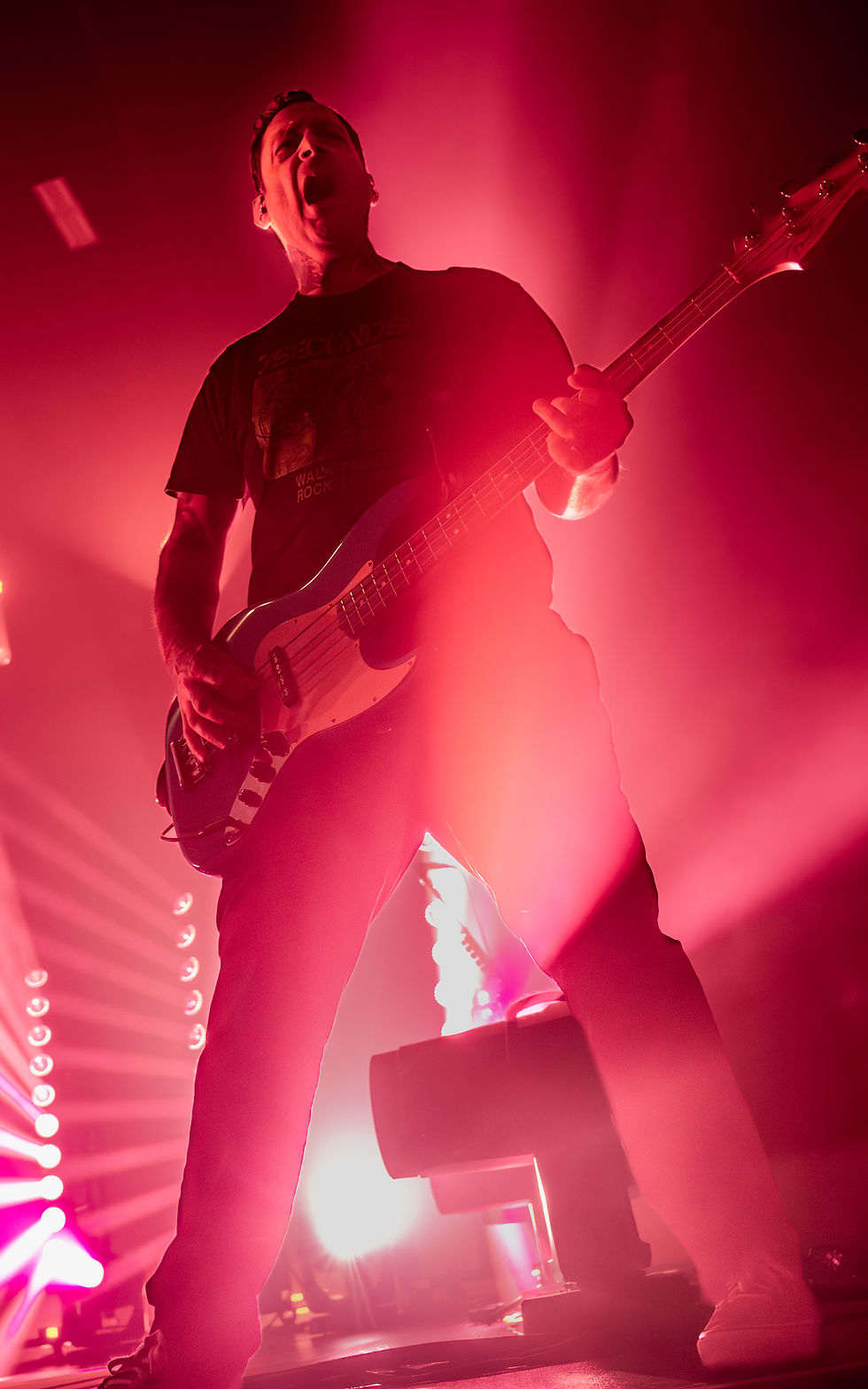
The band leaned into that momentum, moving seamlessly through a set packed with songs that have long outgrown their original release dates. Each track landed with the same urgency it must have had years ago, but now carried by hundreds of voices at once, louder and more insistent than ever.
Midway through, everything shifted.
Stripped to acoustic, frontman Tim McIlrath stepped into the quiet with “Hero of War” and “Swing Life Away.” The change was immediate. Where there had been movement, there was stillness. Where there had been shouting, there was listening. Phones lowered. Conversations stopped. For a few minutes, the room exhaled together, held in place by the weight of the songs rather than their volume.
It didn’t last—but it didn’t need to.
The full band returned with force, rebuilding the energy piece by piece until it crested with “Prayer of the Refugee.” It felt like a closing statement, delivered with the kind of intensity that leaves nothing behind. The band stepped offstage, and for a moment, it seemed final.
But the room wasn’t done yet.
The brief pause only sharpened the anticipation, the crowd holding onto the last note like it hadn’t fully landed. When Rise Against returned, it felt deliberate—earned.
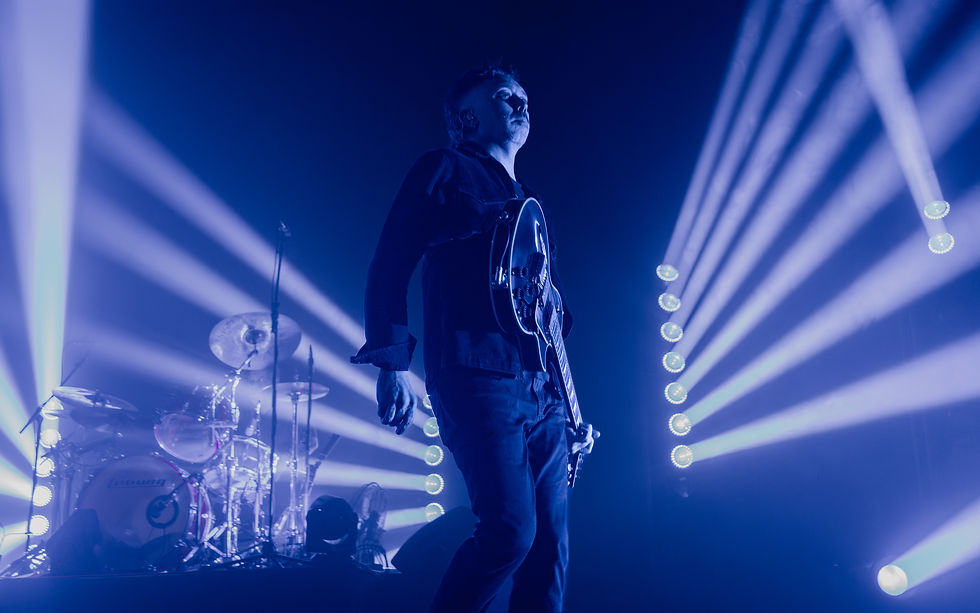
“Make It Stop (September’s Children)” carried a different kind of weight, its message landing with clarity in a room that had already proven how deeply these songs still resonate. From there, “Savior” brought everything to a close—not quietly, not gently, but in full voice. The crowd didn’t just sing along; they took over, turning the final moments into something shared between stage and floor, impossible to separate.
By the time the last chord rang out, the distinction between band and audience had all but disappeared.
What remained was something louder than a setlist and more lasting than a single night—an echo of why these songs have endured, carried forward by every voice that refused to let them fade.


Comments