

.png)
Monolord and Mizmor Deliver a Night of Heavy Music and Quiet Reverence in Seattle
The Swedish doom metal trio and Portland's Mizmor transformed Substation into a space for reflection, immersion, and overwhelming sound.
Article & Photos by Vaneza Gutiérrez Wyckoff

Heavy music is often misunderstood.
For those unfamiliar with doom metal and its many neighboring subgenres, the expectation might be one of chaos: constant movement, shouted lyrics, and relentless energy. Yet on a recent night at Seattle's Substation, Monolord and Mizmor offered something entirely different. Their performances felt less like a traditional concert and more like a shared act of reverence, with an audience gathered not simply to hear the music, but to fully surrender to it.
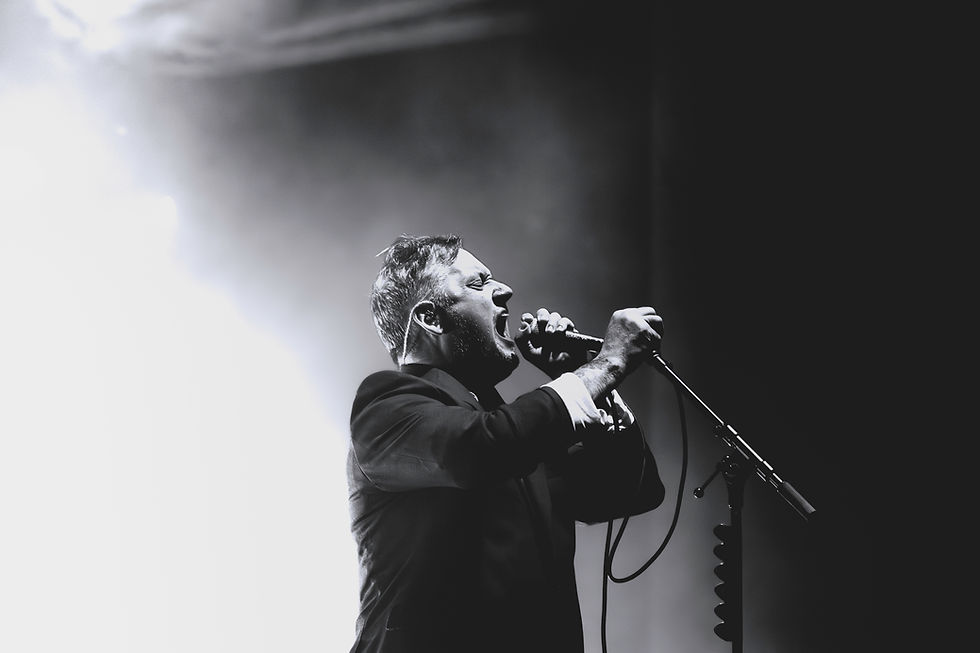
Opening the evening was Portland-based band Mizmor, whose atmospheric blend of doom, black metal, and post-metal immediately transformed the venue. Layers of distortion and crushingly heavy instrumentation filled the room, creating soundscapes that felt immense in both volume and emotional weight.
While the vocals often arrived as anguished screams and growls, the emotional core of the music never felt inaccessible. If anything, the obscured lyrics seemed to direct attention elsewhere. Listeners were encouraged to focus on the movement of the songs themselves: the tension and release, the gradual crescendos, and the immense walls of sound that seemed to vibrate through every surface of the venue.
It was music designed to be felt as much as heard.

By the time Monolord took the stage, the atmosphere inside Substation had become almost meditative. Thick riffs rolled through the room like distant thunder while hypnotic rhythms encouraged the audience to settle into the band's deliberate pacing.
Unlike many rock concerts where crowds sing along to every chorus, the audience response throughout the night was notably restrained. A few hands rose and swayed gently in time with the music, but most attendees remained nearly motionless, heads bowed and eyes closed as they absorbed each song. The room carried an energy that felt remarkably focused, as though everyone present understood that the experience required attention rather than participation.
The result was surprisingly communal.

Rather than drawing energy from outward expression, the crowd seemed connected through collective immersion. Hundreds of people shared the same sonic journey while responding in deeply personal ways. Some stood completely still. Others rocked gently with the rhythm. Yet despite these individual experiences, there was a palpable sense of unity throughout the room.
Part of what made the evening so compelling was the diversity of the audience itself. Fans spanned multiple generations, from teenagers and young adults discovering the genre to longtime devotees sporting decades of experience and impressive, Gandalf-worthy white beards. The gathering served as a reminder that heavy music continues to bridge age groups and backgrounds through a shared appreciation for artistry that values patience, atmosphere, and emotional depth.
Monolord's performance showcased exactly why the Swedish trio has become one of doom metal's most respected acts. Their music thrives on repetition and gradual evolution, allowing riffs to breathe and develop rather than rushing toward a destination. What might appear simplistic from the outside revealed itself to be remarkably nuanced in practice. Small shifts in tone, dynamics, and tempo carried enormous emotional impact, drawing listeners deeper into each composition.

The band's stage presence mirrored the character of their music. There were few dramatic gestures and little need for elaborate theatrics. Instead, the focus remained firmly on the songs themselves. Every note felt intentional, every sustained chord serving a purpose within the larger emotional arc of the set.
That restraint only amplified the music's power.
Throughout the evening, both Mizmor and Monolord demonstrated that heaviness is about far more than volume or aggression. At its best, heavy music creates space for reflection, introspection, and emotional release. The performances at Substation accomplished exactly that, transforming overwhelming sound into something unexpectedly transcendent.
As the final notes faded and the audience slowly emerged from the spell cast over the room, the atmosphere felt markedly different from the end of a typical concert. There was applause, certainly, but also a sense of quiet gratitude. The crowd wasn't leaving with the adrenaline rush often associated with live music. Instead, they departed carrying something more reflective.

For a few hours, Monolord and Mizmor turned Seattle's Substation into a sanctuary of distortion, volume, and contemplation, proving that sometimes the heaviest music can also be the most profound.


Comments