

.png)
Sienna Spiro’s 'Visitor' Finds Beauty in Everything That Cannot Stay
Updated: Sep 14
Following her viral song in The Devils Wears Prada 2, Sienna Spiro's album 'Visitor' turns the fear of being temporary into a timeless portrait of love, longing and letting go.

Article Contributed by Shyanne Vaden
When we first heard Sienna Spiro on her song "Material Lover," we were immediately taken aback. We thought immediately this has to be some Adele, Olivia Dean hybrid and we were so excited for yet another expansive, feminine singer to be welcomed onto the scene with force, and at 20 years old no less.
On her debut album, Visitor, Sienna Spiro transforms the fear of being temporary into a tender, cinematic experience.
The young London singer-songwriter moves through the record like someone lingering, never entirely certain whether she is being invited to stay or quietly preparing to leave.
Released July 2, 2026, 'Visitor' consists of ten songs built around Spiro’s vocals, piano melodies and the classic soul arrangements that she is known for. Its sound belongs to another era, recalling the grandeur of Adele (as stated before,) Amy Winehouse and the torch singers who turned devastation into something elegant. Spiro’s anxieties are modern, they are just like our own.
She is not simply afraid of losing someone; she is afraid of her place in their life when she sort of intuitively knew it was not going to last long in the first place.
The opener, “This Is My House,” presents Spiro as confident and commanding. Backed by an energetic, band arrangement, she establishes ownership over her emotions. “We’re Not in Love” confronts the confusion of a relationship that behaves like love without accepting responsibilities, while “Great Expectation” captures the optimism of building a future around another person’s promise. Spiro has explained that the latter was inspired by imagining an older man visiting her in New York, turning one possibility into an entire fantasy.
That tendency to transform an inch of attention into a mile of expectation, as many 20 somethings may know to be true, becomes one of the album’s most painfully relatable themes.
Apple Music’s “Die on This Hill,” Spiro’s breakthrough song, remains one of the record’s strongest moments. Her voice begins with restraint before rising into something very desperate. She refuses to apologize for caring, even when the person receiving that devotion cannot meet her there.
What could sound melodramatic in another singer’s hands, which can happen a lot, feels convincing with Spiro. Her rasp gives every note a slightly weathered edge, making her sound both young and strangely timeless. The album becomes more complicated with “He’s Not My Baby, I’m His,” which examines an age-gap relationship through a deliberately unsettling imbalance of possession and power. “Pure” turns that scrutiny inward, she questions who she is beneath other people’s expectations and whether she can still recognize herself without their validation and fame.
It is one of the album’s quietest songs by far, but also one of its most revealing to the themes on 'Visitor.'
In “The Visitor,” Spiro accepts temporary affection because even borrowed intimacy feels preferable to its absence, something many humans know well and fall to. It is easier to be liked than to be lonely. When she describes herself as a visitor in someone’s arms, there isn’t an accusation, only the weight of already knowing how the relationship will end.
The strings and piano give the song cinematic weight without burying its vulnerability.
Spiro reportedly attempted to write it nine times, determined to articulate her feelings and the album’s feeling correctly. “You Stole the Show” continues the record’s meditation on attachment, memory and how easily another person can become the center of one’s internal world. Our favorite song is the ending song, “Mono No Aware,” which is named after the Japanese concept of recognizing life’s impermanence and loving things more because they will disappear. Its smoky jazz arrangement is so beautiful.
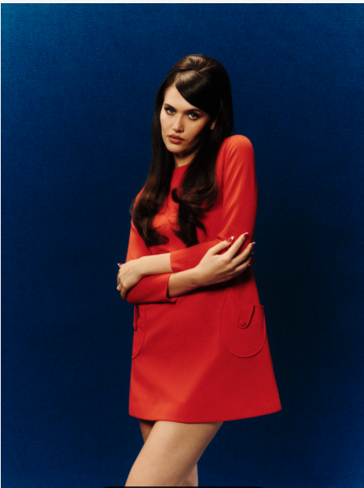
Spiro does not overcome her fear of endings, she learns that an experience does not need to last forever to have mattered. That realization gives 'Visitor' its emotional arc. Spiro begins by fearing she is temporary and finishes by understanding that everything is, that is the point of life. It’s better to experience that than run from it. The album’s beauty lies in the distance between those two truths and in the young artist discovering it.
Enjoying SoundCheck Mag?
If this article resonates with you, consider joining us on this journey. Your support makes all the difference!


Comments